
How Does Privacy Trust Boost Competitive Advantage Now?
The Future Business Environment
The future business environment is deeply rooted in data. Every interaction, transaction, and operational decision relies on information. Customers share personal details. Employees entrust organizations with sensitive records. Partners exchange confidential data to enable collaboration.
In this evolving landscape, privacy expectations are rising. People want to know how their data is used, stored, and protected. Businesses that fail to respect these expectations risk more than regulatory penalties. They risk losing credibility, loyalty, and market relevance.
This is where privacy as a strategic business asset becomes essential. Organizations that proactively protect data position themselves as responsible, forward-thinking, and trustworthy.
Understanding Data Privacy and Data Protection
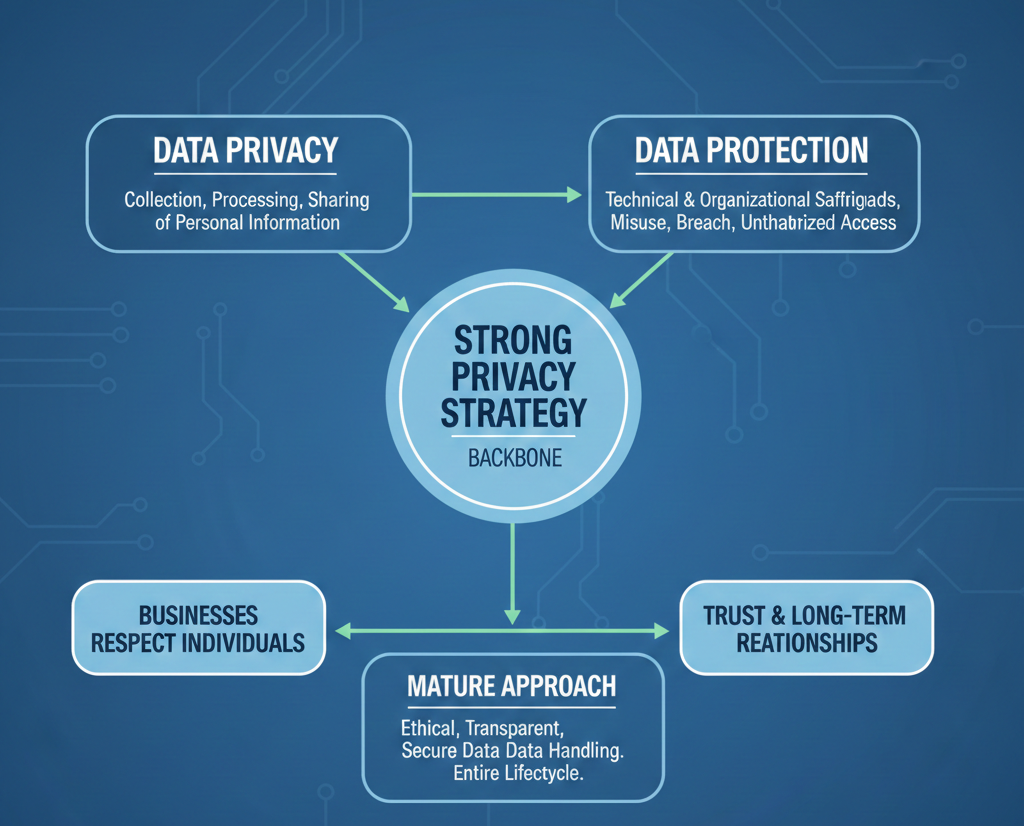
Data privacy focuses on how personal information is collected, processed, and shared. Data protection refers to the technical and organizational measures used to safeguard data from misuse, breaches, or unauthorized access.
Together, they form the backbone of a strong privacy strategy. A mature approach ensures that data is handled ethically, transparently, and securely across its entire lifecycle.
When businesses treat privacy seriously, they demonstrate respect for individuals. This respect translates directly into trust and long-term relationships.
Privacy Beyond Legal Compliance
For many organizations, privacy initiatives begin with regulations. Laws such as GDPR and other global frameworks have pushed companies to act. However, compliance alone is not enough.
From Operational Cost to Strategic Value
When privacy is viewed only as a legal requirement, it becomes a cost center. When it is embedded into a business strategy, it becomes a value driver. Organizations that invest in business privacy reduce risks, improve operational efficiency, and strengthen stakeholder confidence.
Privacy aligned with strategy enables smarter decisions, safer innovation, and sustainable growth.
Trust as the Foundation of Modern Business
Trust has become one of the most valuable currencies in business. Customers choose brands they trust. Employees are more likely to commit to organizations that respect them. Investors support companies with strong governance.
Customer Trust and Brand Reputation
Strong data privacy practices reassure customers that their information is safe. This reassurance leads to higher engagement, stronger loyalty, and positive word of mouth. A single data breach can damage a reputation for years, while consistent privacy protection builds credibility over time.
Organizations that prioritize privacy stand out as reliable partners in an uncertain digital world.
Competitive Advantage Through Strong Privacy Practices
Privacy is no longer just a defensive measure. It is a competitive differentiator.
Differentiation in Crowded Markets
In markets where products and services look similar, trust becomes the deciding factor. Businesses that clearly communicate their privacy strategy gain an edge. Customers prefer companies that respect their data and give them control.
This is how a privacy-driven business strategy creates a real market advantage.
Employee Data Privacy as an Organizational Strength
Privacy is not only about customers. Employees are equally important stakeholders. Their personal and professional data must be handled with care.
Building Internal Trust and Stability
When employees feel their data is protected, they feel valued. This sense of respect improves morale, productivity, and retention. Strong employee data protection practices also reduce internal risks and strengthen organizational culture.
A privacy-conscious workplace is a stable and resilient workplace.
Privacy by Design and Default
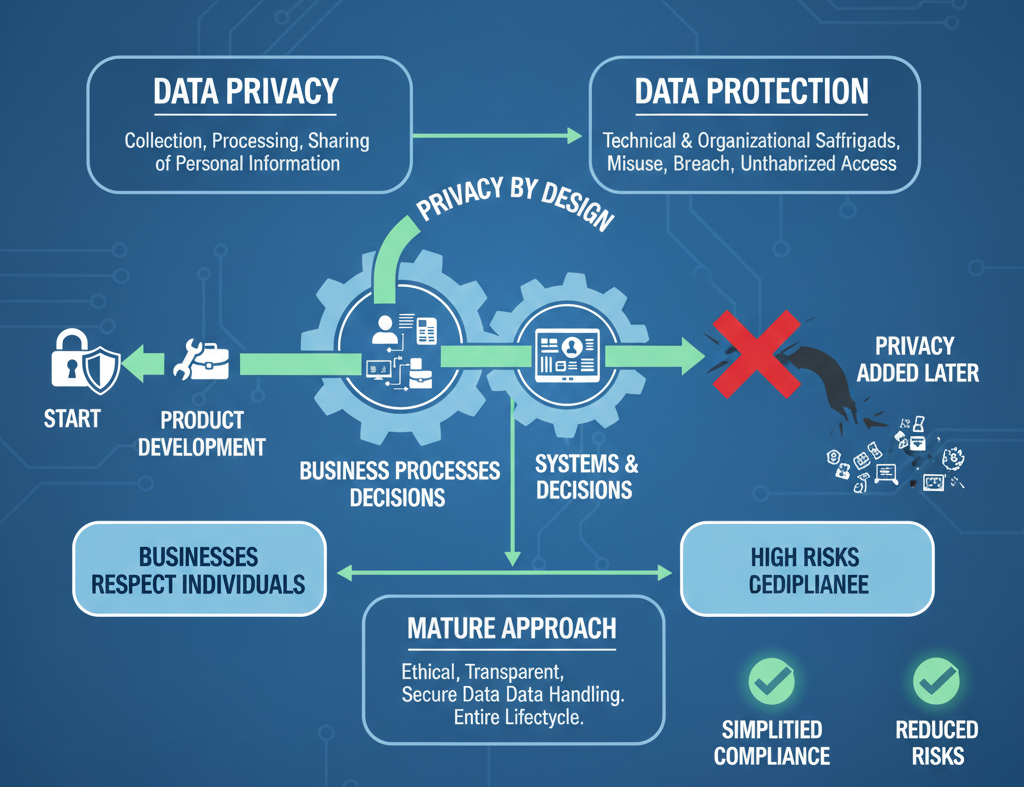
Privacy should not be added after systems are built. It should be integrated from the start.
Embedding Privacy into Business Processes
Privacy by design ensures that data protection is considered in every process, system, and decision. From product development to HR operations, privacy becomes a natural part of how the organization functions.
This proactive approach reduces risks and simplifies compliance while supporting innovation.
Leadership and Governance in Privacy Strategy
Effective privacy requires strong leadership. Executives and boards play a critical role in setting expectations, allocating resources, and ensuring accountability.
Clear governance structures ensure that information security and privacy policies are followed consistently. Ethical leadership reinforces the message that privacy matters at every level of the organization.
Technology and Secure Digital Growth
Digital transformation is accelerating. Cloud platforms, automation, and analytics offer enormous opportunities. However, they also increase risk exposure.
Organizations that invest in secure technologies and privacy-focused architectures enable safe innovation. Secure growth depends on balancing opportunity with responsibility.
A useful reference on global privacy principles can be found at the International Association of Privacy Professionals.
How Privacy Trust Measures and Maximizes Business Value
Privacy trust helps quantify returns through lower breach expenses, streamlined audits, better retention, and enhanced equity. By tracking these metrics, organizations recognize privacy as an investment, not a cost, driving profitability and long-term success.
With expanding regulations and heightened awareness, privacy trust helps businesses lead by adapting proactively. Early adoption positions organizations ahead, while delays hinder progress. Embracing privacy trust today ensures relevance and leadership in tomorrow’s ethical data landscape.
Measuring the Business Value of Privacy
Privacy investments deliver measurable returns. Reduced breach costs, faster compliance audits, improved customer retention, and stronger brand equity all contribute to business value.
Organizations that track these outcomes clearly see the benefits of data protection for organizations. Privacy is not an expense. It is an investment in long-term success.
Global Privacy Trends Shaping the Future
Privacy regulations are expanding worldwide. Consumer awareness is increasing. Ethical data use is becoming a core expectation.
Businesses that adapt early will lead. Those who delay will struggle to catch up. The future belongs to organizations that treat privacy as a strategic business asset today.
Conclusion
The business environment of the future demands responsibility, transparency, and trust. Organizations that respect and protect personal data are not just meeting expectations. They are shaping their own success.
Privacy as a strategic business asset empowers businesses to build trust, enable innovation, and achieve sustainable growth. Those who recognize this today will lead tomorrow.
Lorem ipsum dolor sit amet, consectetur adipiscing elit. Ut elit tellus, luctus nec ullamcorper mattis, pulvinar dapibus leo.
Frequently Asked Questions
What does privacy as a strategic business asset mean?
It means treating data privacy as a source of trust, value, and competitive advantage rather than only a compliance requirement.
How does data privacy create a competitive advantage?
Strong privacy builds customer trust, protects reputation, and differentiates businesses in competitive markets.
Is privacy only important for large organizations?
No. Businesses of all sizes handle personal data and benefit from strong data protection practices.
How does employee data privacy impact business performance?
Respecting employee privacy improves trust, morale, and productivity while reducing internal risks.
Can privacy investments improve profitability?
Yes. Privacy reduces breach costs, increases customer loyalty, and strengthens brand value over time.
How can organizations start building a privacy-driven strategy?
They can begin by assessing data practices, embedding privacy by design, training employees, and strengthening governance.